Max Littman, LCSW
January 9, 2026
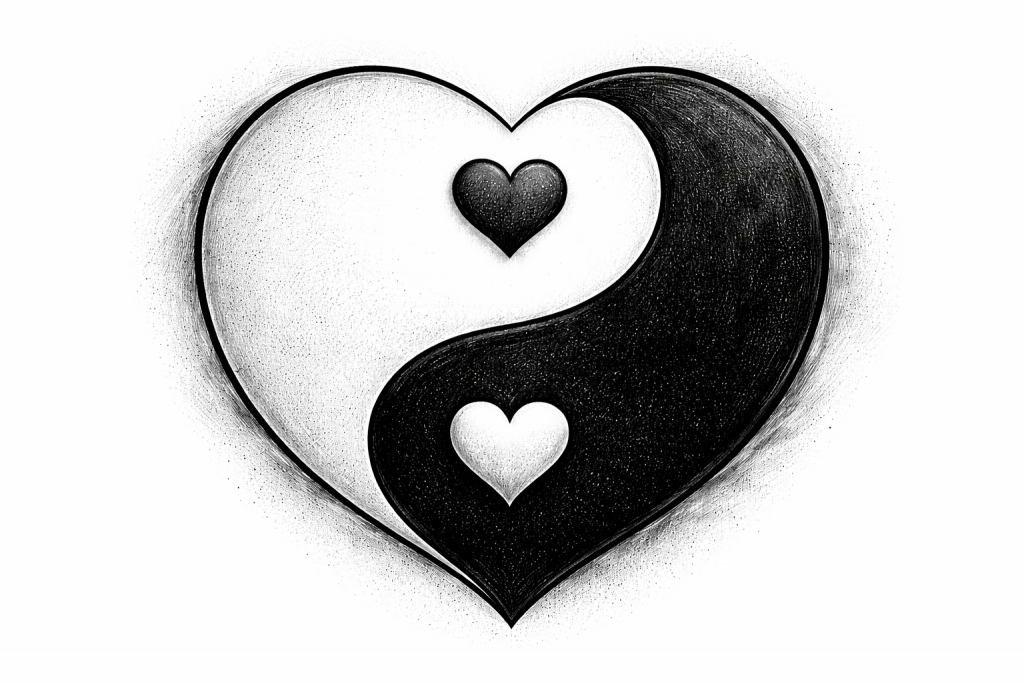
Non-duality is ever present in the healing spaces I frequent. It is governed by the belief that all that is visible and invisible to our senses, all living systems are interconnected and part of one, whole larger system and that there is no separation between us and everything.
There is a way non-duality can be relieving. It can loosen our minds, bodies, and spirits. It can help us feel connected, not so lonely, so helpless. It can be a reminder that beneath the noise of thought, identity, physical reality, and history, there is something shared and spacious. There is something underneath that does not fragment so easily. For many people, coming to a non-dual understanding of the universe and having language for it is a balm after years of feeling divided from themselves and the world.
And yet, I notice something else happens, both in myself and in the spaces that recognize or center non-duality.
The language of non-duality can be detached. It can trivialize difference. It can hover just above experience rather than enter it. Complexity is named, then quickly dismissed. Pain might be acknowledged, then folded into a larger claim about illusion, unity, or the unreality of separateness. The move is subtle. It often sounds wise. It often is not meant to distance. But it does.
What gets lost first is attunement.
Attunement requires staying with difference long enough to feel it. It asks for contact with specificity. This body. This history. This nervous system responding in this particular way, right now. Non-dual framing can short-circuit that contact when it bypasses the lived texture of experience in favor of a conclusion that everything is already one, already resolved, already whole.
Bob Falconer, in his book Spirit, captures something essential here when he writes from the perspective of Spirit as a guide:
“Love, always love. It is all that matters. I had my non-dual perfection, but it lacked love, so I split and withdrew and made not me. Two are required for love. This is a sacrifice, but more a birth, a great fulfillment and joy.”
What stands out is not a rejection of non-duality, but a recognition of its limits when it becomes impersonal and contained. Love, as Falconer describes it (or he might say how his guide, Spirit, describes it), requires relation. It requires recognition of separateness, of difference. It requires contact and presence. Unity without relationship becomes sterile. Perfect, perhaps, but untouched.
I hear the relational aspect of love flattened when suffering is described as a misunderstanding of mind rather than something carried in tissue, memory, and relationship. I feel it when curiosity is replaced with certainty, when the answer arrives before the listening has finished. The system in front of us becomes compressed into a single truth, even if that truth gestures toward wholeness.
Flattening is not the same as simplifying.
There is a kind of simplicity that comes from depth. It emerges after complexity has been metabolized, not before. It holds paradox rather than erasing it. It can say both and mean it. Many non-dual teachings point toward this kind of simplicity, but in practice, the way they are taken up often does something else. They compress experience instead of allowing it to unfold.
Human systems are not simple in the way aphorisms are simple. They are patterned, layered, recursive, and alive. What looks like one thing at a distance becomes many things when you move closer. Shame might be protection. Anger might be grief in armor. Resistance might be a memory of harm. To say there is no separation, no identity, no parts, no story may be philosophically elegant, but it can be clinically and relationally blunt.
Attunement asks us to move in the opposite direction. It asks us to differentiate before we integrate. To stay with what appears divided without rushing to heal it through explanation. To let the broad manifestations of something seemingly simple show themselves fully.
Non-duality, when held lightly, can support this. It can remind us not to mistake any single expression of experience for the whole. But when it is held tightly, it can become a way of not touching what is actually here. A way of standing just far enough back to avoid being impacted.
Love requires presence. It requires being affected. It requires staying with complexity that often involves pain.
When non-dual language is paired with attunement it becomes alive and does not erase difference. It dignifies it. It does not deny form. It meets form with presence. It does not argue with pain. It stays close to it.
The irony is that true non-separation is not achieved by collapsing complexity, but by relating to it. By letting the many expressions of being human be seen, felt, and responded to as they are. Attunement is not a detour from unity. It is one of the ways unity becomes real.
Sometimes the most non-dual act is not to transcend the system in front of us, but to sit with it. To stay curious. To remain impacted. To allow the simple to reveal how differentiated and vast it actually is.
For feedback and comments, I can be reached at max@maxlittman.com.
I provide consultation and therapy for therapists.
Purchase my new book IFS Therapy for Gay and Queer Men here.